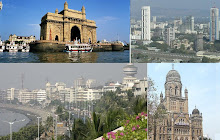
Sunday, July 19, 2009

MUMBAI DABBAWALA


A dabbawala (Marathi: डब्बेवाले, Hindi: डब्बावाला), literally, box person, see Etymology), also spelled as dabbawalla or dabbawallah is a person in the Indian city of Mumbai who is employed in a unique service industry whose primary business is collecting the freshly cooked food in lunch boxes from the residences of the office workers (mostly in the suburbs), delivering it to their respective workplaces and returning back the empty boxes by using various modes of transport. "Tiffin" is an old-fashioned English word for a light lunch, and sometimes for the box it is carried in. For this reason, the dabbawalas are sometimes called Tiffin Wallahs.
Contents
1 Etymology and historical roots
2 Background and the delivery chain
3 The Nutan Mumbai Tiffin Box Suppliers Trust
4 Economic analysis
5 Low-tech and lean
6 Uninterrupted services
7 Notes
8 References
9 External links


Etymology and historical roots
The word "Dabbawala" in Marathi when literally translated, means "one who carries a box". "Dabba" means a box (usually a cylindrical tin or aluminium container), while "wala" is a suffix, denoting a doer of the preceding word[1]. The closest meaning of the Dabbawala in English would be the "lunch box delivery man". Though this profession seems to be simple, it is actually a highly specialized service in Mumbai which is over a century old and has become integral to the cultural life of this city.
The concept of the dabbawala originated when India was under British rule. Many British people who came to the colony did not like the local food, so a service was set up to bring lunch to these people in their workplace straight from their home. Nowadays, although Indian business men are the main customers for the dabbawalas, increasingly affluent families employ them instead for lunch delivery to their school-aged children. Even though the services provided might include cooking, it primarily consists of only delivery either home-made or in that latter case, food ordered from a restaurant.

Background and the delivery chain
At 19,373 persons per km², Mumbai is India's most densely populated city with a huge flow of traffic. Because of this, lengthy commutes to workplaces are common, with many workers traveling by train.
Instead of going home for lunch or paying for a meal in a café, many office workers have a cooked meal sent either from their home, or sometimes from a caterer who delivers it to them as well, essentially cooking and delivering the meal in lunch boxes and then having the lunch boxes collected and re-sent the next day. This is usually done for a monthly fee. The meal is cooked in the morning and sent in lunch boxes carried by dabbawalas, who have a complex association and hierarchy across the city.

A collecting Dabbawala on a bicycle
A collecting dabbawala, usually on bicycle, collects dabbas from homes or from the dabba makers. The dabbas have some sort of distinguishing mark on them, such as a color or symbol. The dabbawala then takes them to a designated sorting place, where he and other collecting dabbawalas sort (and sometimes bundle) the lunch boxes into groups. The grouped boxes are put in the coaches of trains, with markings to identify the destination of the box (usually there is a designated car for the boxes). The markings include the rail station to unload the boxes and the building address where the box has to be delivered.
At each station, boxes are handed over to a local dabbawala, who delivers them. The empty boxes, after lunch, are again collected and sent back to the respective houses.

The Nutan Mumbai Tiffin Box Suppliers Trust
This service was originated in 1880. In 1890, Mahadeo Havaji Bachche, started a lunch delivery service with about 100 men.[2] In 1930, he informally attempted to unionize the dabbawallas. Later a charitable trust was registered in 1956 under the name of Nutan Mumbai Tiffin Box Suppliers Trust. The commercial arm of this trust was registered in 1968 as Mumbai Tiffin Box Carriers Association. The present President of the association is Raghunath Medge. Nowadays, the service often includes cooking of foods in addition to the delivery.

Economic analysis

It is estimated that the dabbawala industry grows by 5-10% each year.
Each dabbawala, regardless of role, gets paid about two to four thousand rupees per month (around £25–50 or US$40–80).[3]
More than 175,000 or 200,000 lunch boxes get moved every day by an estimated 4,500 to 5,000 dabbawalas, all with an extremely small nominal fee and with utmost punctuality. According to a recent survey, there is only one mistake in every 6,000,000 deliveries, statistically equivalent to a Six Sigma (99.9999) rating[4]
The BBC has produced a documentary on dabbawalas, and Prince Charles, during his visit to India, visited them (he had to fit in with their schedule, since their timing was too precise to permit any flexibility). Owing to the tremendous publicity, some of the dabbawalas were invited to give guest lectures in top business schools of India, which is very unusual. Most remarkably in the eyes of many Westerners, the success of the dabbawala trade has involved no advanced technology.[5]
The New York Times reported in 2007 that the 125-year-old dabbawala industry continues to grow at a rate of 5–10% per year.[6]

Low-tech and lean

A dabba, or Indian-style tiffin box.
Although the service remains essentially low-tech, with the barefoot delivery men as the prime movers, the dabbawalas have started to embrace modern information technology, and now allow booking for delivery through SMS.[7] An on-line poll on the web site ensures that customer feedback is given pride of place. The success of the system depends on teamwork and time management that would be the envy of a modern manager. Such is the dedication and commitment of the barely literate and barefoot delivery men (there are only a few delivery women) who form links in the extensive delivery chain, that there is no system of documentation at all. A simple colour coding system doubles as an ID system for the destination and recipient. There are no multiple elaborate layers of management either — just three layers. Each dabbawala is also required to contribute a minimum capital in kind, in the form of two bicycles, a wooden crate for the tiffins, white cotton kurta-pyjamas, and the white trademark Gandhi topi (cap). The return on capital is ensured by monthly division of the earnings of each unit.

Uninterrupted services
The service is uninterrupted even on the days of severe weather such as Mumbai's characteristic monsoons. The local dabbawalas at the receiving and the sending ends are known to the customers personally, so that there is no question of lack of trust. Also, they are well accustomed to the local areas they cater to, which allows them to access any destination with ease. Occasionally, people communicate between home and work by putting messages inside the boxes. However, this was more common before the accessibility of instant telecommunications.

Four thousand five hundred semi-literate dabbawalas collect and deliver 175,000 packages within hours. What should we learn from this unique, simple and highly efficient 120-year-old logistics system?
Hungry kya? What would you like: pizza from the local Domino's (30 minute delivery) or a fresh, hot meal from home? Most managers don't have a choice. It's either a packed lunch or junk food grabbed from a fast food outlet. Unless you live in Mumbai [ Images ], that is, where a small army of 'dabbawalas' picks up 175,000 lunches from homes and delivers them to harried students, managers and workers on every working day. At your desk. 12.30 pm on the dot. Served hot, of course. And now you can even order through the Internet.
The Mumbai Tiffin Box Suppliers Association is a streamlined 120-year-old organisation with 4,500 semi-literate members providing a quality door-to-door service to a large and loyal customer base.
How has MTBSA managed to survive through these tumultuous years? The answer lies in a twin process that combines competitive collaboration between team members with a high level of technical efficiency in logistics management. It works like this...
After the customer leaves for work, her lunch is packed into a tiffin provided by the dabbawala. A color-coded notation on the handle identifies its owner and destination. Once the dabbawala has picked up the tiffin, he moves fast using a combination of bicycles, trains and his two feet.
A BBC crew filming dabbawalas in action was amazed at their speed. "Following our dabbawala wasn't easy, our film crew quickly lost him in the congestion of the train station. At Victoria Terminus [ Images ] we found other fast moving dabbawalas, but not our subject... and at Mr Bhapat's ayurvedic pharmacy, the lunch had arrived long before the film crew," the documentary noted wryly. So, how do they work so efficiently?
Team work
The entire system depends on teamwork and meticulous timing. Tiffins are collected from homes between 7.00 am and 9.00 am, and taken to the nearest railway station. At various intermediary stations, they are hauled onto platforms and sorted out for area-wise distribution, so that a single tiffin could change hands three to four times in the course of its daily journey.
At Mumbai's downtown stations, the last link in the chain, a final relay of dabbawalas fan out to the tiffins' destined bellies. Lunch hour over, the whole process moves into reverse and the tiffins return to suburban homes by 6.00 pm.
To better understand the complex sorting process, let's take an example. At Vile Parle Station, there are four groups of dabbawalas, each has twenty members and each member services 40 customers. That makes 3,200 tiffins in all. These 3,200 tiffins are collected by 9.00 am, reach the station and are sorted according to their destinations by 10.00 am when the 'Dabbawala Special' train arrives.
The railway provides sorting areas on platforms as well as special compartments on trains traveling south between 10.00 am and 11.30 am.
During the journey, these 80 dabbawalas regroup according to the number of tiffins to be delivered in a particular area, and not according to the groups they actually belong to. If 150 tiffins are to be delivered in the Grant Road Station area, then four people are assigned to that station, keeping in mind one person can carry no more than 35-40 tiffins.
During the earlier sorting process, each dabbawala would have concentrated on locating only those 40 tiffins under his charge, wherever they come from, and this specialisation makes the entire system efficient and error-free. Typically it takes about ten to fifteen minutes to search, assemble and arrange 40 tiffins onto a crate, and by 12.30 pm they are delivered to offices.
In a way, MTBSA's system is like the Internet. The Internet relies on a concept called packet switching. In packet switched networks, voice or data files are sliced into tiny sachets, each with its own coded address which directs its routing.
These packets are then ferried in bursts, independent of other packets and possibly taking different routes, across the country or the world, and re-assembled at their destination. Packet switching maximises network density, but there is a downside: your packets intermingle with other packets and if the network is overburdened, packets can collide with others, even get misdirected or lost in cyberspace, and almost certainly not arrive on time.
Elegant logistics
In the dabbawalas' elegant logistics system, using 25 kms of public transport, 10 km of footwork and involving multiple transfer points, mistakes rarely happen. According to a Forbes 1998 article, one mistake for every eight million deliveries is the norm. How do they achieve virtual six-sigma quality with zero documentation? For one, the system limits the routing and sorting to a few central points. Secondly, a simple color code determines not only packet routing but packet prioritising as lunches transfer from train to bicycle to foot.
Who are the dabbawalas?
Descendants of soldiers of the legendary Maharashtrian warrior-king Shivaji, dabbawalas belong to the Malva caste, and arrive in Mumbai from places like Rajgurunagar, Akola, Ambegaon, Junnar and Maashi. "We believe in employing people from our own community. So whenever there is a vacancy, elders recommend a relative from their village," says Madhba, a dabbawala.
"Farming earns a pittance, compelling us to move to the city. And the tiffin service is a business of repute since we are not working under anyone. It's our own business, we are partners, it confers a higher status in society," says Sambhaji, another dabbawala. "We earn more than many padha-likha (educated) graduates," adds Khengle smugly.

The proud owner of a BA (Hons) degree, Raghunath Meghe, president of MTBSA, is a rare graduate. He wanted to be a chartered accountant but couldn't complete the course because of family problems. Of his three children, his daughter is a graduate working at ICICI [ Get Quote ], one son is a dabbawala and the younger son is still studying.
Education till standard seven is a minimum prerequisite. According to Meghe, "This system accommodates those who didn't or couldn't finish their studies. It's obvious that those who score good marks go for higher education and not to do this job, but we have people who have studied up to standard twelve who couldn't find respectable jobs." There are only two women dabbawalas.
Apart from commitment and dedication, each dabbawala, like any businessman, has to bring some capital with him. The mini-mum investment is two bicycles (approximately Rs 4,000), a wooden crate for the tiffins (Rs 500), at least one white cotton kurta-pyjama (Rs 600), and Rs 20 for the trademark Gandhi topi.
Competitive collaboration

MTBSA is a remarkably flat organisation with just three tiers: the governing council (president, vice president, general secretary, treasurer and nine directors), the mukadams and the dabbawalas. Its first office was at Grant Road. Today it has offices near most railway stations.
Here nobody is an employer and none are employees. Each dabbawala considers himself a shareholder and entrepreneur.
Surprisingly MTBSA is a fairly recent entity: the service is believed to have started in the 1880s but officially registered itself only in 1968. Growth in membership is organic and dependent on market conditions.
This decentralised organisation assumed its current form in 1970, the most recent date of restructuring. Dabbawalas are divided into sub-groups of fifteen to 25, each supervised by four mukadams. Experienced old-timers, the mukadams are familiar with the colors and codings used in the complex logistics process.
Their key responsibility is sorting tiffins but they play a critical role in resolving disputes; maintaining records of receipts and payments; acquiring new customers; and training junior dabbawalas on handling new customers on their first day.
Each group is financially independent but coordinates with others for deliveries: the service could not exist otherwise. The process is competitive at the customers' end and united at the delivery end.
Each group is also responsible for day-to-day functioning. And, more important, there is no organisational structure, managerial layers or explicit control mechanisms. The rationale behind the business model is to push internal competitiveness, which means that the four Vile Parle groups vie with each other to acquire new customers.
Building a clientele

The range of customers includes students (both college and school), entrepreneurs of small businesses, managers, especially bank staff, and mill workers.
They generally tend to be middle-class citizens who, for reasons of economy, hygiene, caste and dietary restrictions or simply because they prefer whole-some food from their kitchen, rely on the dabbawala to deliver a home cooked mid-day meal.
New customers are generally acquired through referrals. Some are solicited by dabbawalas on railway platforms. Addresses are passed on to the dabbawala operating in the specific area, who then visits the customer to finalize arrangements. Today customers can also log onto the website www.webrishi.com to access the service.
Service charges vary from Rs 150 to Rs 300 per tiffin per month, depending on location and collection time. Money is collected in the first week of every month and remitted to the mukadam on the first Sunday. He then divides the money equally among members of that group. It is assumed that one dabbawala can handle not more than 30-35 customers given that each tiffin weighs around 2 kgs. And this is the benchmark that every group tries to achieve.
Typically, a twenty member group has 675 customers and earns Rs 100,000 per month which is divided equally even if one dabbawala has 40 customers while another has 30. Groups compete with each other, but members within a group do not. It's common sense, points out one dabbawala.
One dabbawala could collect 40 tiffins in the same time that it takes another to collect 30. From his earnings of between Rs 5,000 to Rs 6,000, every dabbawala contributes Rs15 per month to the association. The amount is utilised for the community's upliftment, loans and marriage halls at concessional rates. All problems are usually resolved by association officials whose ruling is binding.
Meetings are held in the office on the 15th of every month at the Dadar. During these meetings, particular emphasis is paid to customer service. If a tiffin is lost or stolen, an investigation is promptly instituted. Customers are allowed to deduct costs from any dabbawala found guilty of such a charge.
If a customer complains of poor service, the association can shift the customer's account to another dabbawala. No dabbawala is allowed to undercut another.
Before looking into internal disputes, the association charges a token Rs 100 to ensure that only genuinely aggrieved members interested in a solution come to it with their problems, and the officials' time is not wasted on petty bickering.

Learnings
Logistics is the new mantra for building competitive advantage, the world over. Mumbai's dabbawalas developed their home-grown version long before the term was coined.
Their attitude of competitive collaboration is equally unusual, particularly in India. The operation process is competitive at the customers' end but united at the delivery end, ensuring their survival since a century and more. Is their business model worth replicating in the digital age is the big question.

For More Information Visit: http://www.mydabbawala.org/general/aboutdabbawala.htm

BANDRA -WORLI SEA LINK


Carries : 8 lanes of traffic with 2 lanes dedicated for buses.
Crosses: Mahim Bay
Locate: Mumbai, India
Design : Cable-stayed
Total length : 5.6 kilometers (3 mi)
Opening date:30th June, 2009[1]
connects: Bandrato Worli
The Bandra Worli Sea Link (Marathi: वांद्रे-वरळी सागरी महामार्ग) is an 8-lane, cable-stayed bridge with pre-stressed concrete viaduct approaches, which links Bandra and the western suburbs of Mumbai with Worli and central Mumbai, and is the first phase of the proposed West Island Freeway system. The Rs. 1600 crore ($ 400 Million approx.) project of Maharashtra State Road Development Corporation (MSRDC) is being executed by Hindustan Construction Company. Designs and Project management is by M/s DAR Consultants. The bridge was inaugurated on 30 June 2009 (Postponed and actually inaugurated on 1 July 2009) by Congress Chairperson Sonia Gandhi. The Sea Link is likely to reduce travel time between Bandra and Worli from 45–60 minutes to 7 minutes.[2]

Contents
1 Overview
2 Challenges
3 Project location
4 Fact Files
5 Features
6 Project Benefits / Other Features
7 Criticism
8 See also
9 References
10 External links

Overview
The Bandra Worli Sea link, under construction, view from the Taj Lands end Hotel.
Project Highlights
It is India's first eight-lane freeway over the open sea and is hailed as a modern Indian engineering marvel. Some statistics on the bridge, its weight is equivalent to 50000 African elephants, the length of the bridge is 63 times the height of the Qutub Minar in Delhi, the height of the cable-stayed tower is 126m(equal to a 43-storey tower) and the length of steel wires used in the project is equivalent to the circumference of the Earth(each cable can take a weight of 900 tons). It was built by a skilled team comprising of the best engineers from India, as well as, other countries including Britain, Canada,China, Egypt, Hong Kong, Indonesia, Philippines, Serbia, Singapore and Switzerland, Monitored by an Intelligent Bridge System with a 16-lane, state-of-the-art toll plaza.
Presently, the Mahim Causeway is the only link connecting the western suburbs to island city of Mumbai. The existing north–southwestern corridor is highly congested and during the peak hours results in a bottleneck at Mahim Causeway. The sea link will act as an alternate route between the western suburbs of Mumbai and central Mumbai, in addition to the existing Mahim Causeway. This link will also form a part of the west island freeway.
Access will be controlled on the Worli end by toll plazas on the Khan Abdul Ghaffar Khan Road, and on the Bandra end by toll plazas at Love Grove Junction.
Vehicular traffic measuring about 120,000 PCU travels on the Mahim Causeway everyday and during peak hours and it takes about forty minutes to travel from Mahim to Worli, a distance of about 8 km.
MSRDC has awarded the contract of constructing the Bandra Worli Sea-Link – Package - IV to the Hindustan Construction Company and its foreign partner, the China Harbour Engineering Corporation, which has successfully completed similar projects. HCC has the responsibility of maintaining the bridge during the damage liability period of five years.
The original project design was modified to include two separate towers for the main cable stay bridge. In addition to this, the bridge was realigned around 150 meters into the sea and an additional cable stay bridge was introduced at the Worli side to increase the height of the bridge to accommodate the demands of local fishermen of Worli Koliwada to ease the vessel movement under the bridge closer to their habitat. Due to the change in the scope of work, the project was delayed in the initial stages, which resulted in increased project cost. The Bandra Worli Sea-Link was opened at 12:00 midnight on 30 June 2009.
The Bandra Cable Stay Bridge, part of the Bandra Worli Sea Link (BWSL) was connected to the approach spans on May 27, 2008. This is a significant milestone towards completion of the Sea Link being built by HCC prior to the onset of Mumbai’s monsoon this season.
The Bandra Cable Stay section of the BWSL spans 600 m in length and towers to a height of 126 m (equivalent to a 43 storied building). The Cable Stay system comprises km of high strength galvanized steel wires which support the Cable Stay Bridge weighing 20,000 ton.Ultratech cement was the preffered cement supplier for this project. An engineering marvel and the first ever open Sea Bridge of its kind, the Bandra Worli Sea Link is one of the most complex and advanced construction projects in India.
The project was initiated more than 10 years ago but it was delayed due to public interest litigations. The foundation stone was laid in 1999, by Shiv Sena supremo Balasaheb Thackeray.
The sea-link was inaugurated by Sonia Gandhi, Chairperson, UPA & President, INC, on Tuesday, in the Presence of NCP President Sharad Pawar on June 30th, 2009 [3]

Challenges
No effective traffic management system after the end of the bridge as a signal is supposed to come up at a T-junction in a residential area. Also once traffic is offloaded off the bridge it moves onto a 6 lane road however, two lanes of this road go towards car parking as several buildings on the road do not have the provision for cars to be parked.
The Bridge opens out in front of a school which has students coming in at 8:00am and 11:00am (Peak Traffic Time), no provisions have been made for it.
A party hall is also just about 100 meters from the end of the bridge along Worli Sea Face Road which does not have an underground car park or entrance within the building as a result traffic is forced onto the main road which makes just about 2 lanes for travel possible at lunch time and the entire night after 7pm.
Worli Sea Face also offloads onto a road where a overpass had been built originally for the old plan of the bridge to move traffic but now it will create a huge problem as the cars must move below it where only 3 lanes are available. Also on either side of this road, there is a temple (Markandeshwar Mandir) and a shopping mall (Atria Shopping Mall). So the question of eased off traffic is totally nonexistent.
The toll for using the bridge is currently expected to be around Rs 50 (~$1) for passenger cars and Rs 100 (~$2) for large buses and trucks, each one way trip. This toll is reasonable; given the fact that there will be considerable savings in time and fuel cost. There will be no waiver off for any special type of vehicles. Approximately 32000 vehicles, mostly passenger cars, are currently using the sea link on a daily basis.
A bridge which is 5.6 km in length.The entry to the bridge from mahim causeway is approx a little more then 1.5 km and the exit to old passport office(worli) is another 1 km. So the total length from Mahim to Worli is more then 8.2 km, plus a toll fee of Rs 50/- on one time use. The total length from Mahim to Worli(old passport office) the old way is 5.2 km. So they make a new road which is more expensive to travel then the old one and longer too.
The amount of time taken from Mahim to Worli is usually 25 mins. The time taken to enter the BWSL and get out at worli seaface will be 15- 20 mins once the toll starts.The fuel utilized will be the same on both the sides but the toll money will be extra money spent for a little about 15 mins. So most people will travel by the same old road and therefore the purpose of the bridge will be wasted.
As a result of constant change of plans and other delays the cost of the bridge has risen 6 fold from Rs.300 Crore to Rs.1800 Crore. The amount of time to recover this cost would be at least 10 years which is pretty normal for an infrastructure project of this magnitude.

Project location
The project starts from the Interchange at Mahim (i.e. intersection of Western Express Highway and Swami Vivekanand road at Bandra) and connects to Worli at Worli end with overall length of 5.6 km for the entire project.
A cloverleaf interchange at Mahim intersection and a flyover at the Lovegrove intersection have been proposed as part of this project to enhance the faster and safe traffic dispersal.

Fact Files
First & Unique of its type in Mumbai.
Project Cost of Rs.1650 Crores [Rs.16.50 Billion INR](about 330 Million US Dollar).
Rs. 9 Crore alone will be just the cost of illuminating the bridge.
Made with about 38000 KM Long Steel Ropes, 575000 tonnes of Concrete & 6000 Workers.
Toll Cost Estimated about Rs.40 to Rs.50 /-
Will save about 1 Hour of Travel Time & 100 crores of Vehicle Operating Cost for a 7 km distance.
An estimate of about 125000 Vehicles will be using daily. [4]

Features
An 8-lane bridge with 2 lanes dedicated for buses.
Unique bridge design for the Link Bridge to emerge as a landmark structure in the city.
Single tower supported 500 metre long cable-stayed bridge at Bandra Channel and twin tower supported 350 m cable-stayed bridge at Worli Channel for each carriageway.
Modern toll plaza of 16 lanes with automated toll collection system.
An intelligent bridge with state-of-the-art systems for traffic monitoring, surveillance, information and guidance, instrumentation, emergency support, etc.
Development of promenade and landscaping to enhance the environment.

Project Benefits / Other Features
Estimated savings in Vehicle Operating Costs (VOC): Rs. 100 Crores per annul[citation needed].
Mumbai gets a new landmark.

Criticism
The Bandra-Worli link is a short stretch that does not even cover the western shore, as envisaged two decades ago. It took ages because of design changes and payment disputes. The trans-harbour bridge creek has been bid for twice yet not awarded to anybody[5].
BEHIND THE PROJECT

Bandra Worli Sea Link Project has been one of the most
highly recommended project of all the transport studies
done for the metropolitan region during the last forty years.
At present, Mahim causeway is the only link connecting
western suburbs to island city of Mumbai. The existing north south
western corridor is highly congested and during the peak hours
results in a bottleneck at Mahim Causeway.
Vehicular traffic admeasuring about 1,20,000 PCU travels on
the Mahim causeway everyday and during peak hours and
it takes about forty minutes to travel from Mahim causeway to Worli,
a distance of about 8 km.
ALIGNMENT Project Location
Express Highway and Swami Vivekanand road at Bandra and connects to Worli at Worli end with overall length of 5.6 kms for the entire project.
A cloverleaf interchange at Mahim intersection and a flyover at the Lovegrove intersection have been proposed as part of this project to enhance the faster and safe traffic dispersal.
google_protectAndRun("render_ads.js::google_render_ad", google_handleError, google_render_ad);


What is the Status?
Present Progress
Progress Photographs
google_protectAndRun("ads_core.google_render_ad", google_handleError, google_render_ad);
Create your own web pages in minutes...

BANDRA WORLI SEA LINK PROJECT
connecting island and suburbs of mumbai
Copyright 2008-2009 Dar Consultants (I) Pvt. Ltd. All Rights Reserved.
HOME PROJECT DETAILS BENEFITS FEATURES CONTACT US
Schedule of Toll rates will be announced soon.
South carriageway opened to traffic from 1st July 2009.
Construction of the project link will provide an additional fast moving outlet from the island city to the western suburbs & thereby providing much needed relief to the congested Mahim Causeway. This link will also form a part of the western freeway.
MSRDC, as a part of this project has appointed M/s Dar Consultants (U.K) Ltd. & M/s Dar Consultants (India) Pvt. Ltd. to design, proof check and supervise the various components of the project.

Michael Jackson Tryst with Mumbai 1996

Jackson performed at a packed concert here in 1996. The event was organised by Shiv Udyog Sena, an outfit floated by then Shiv Sena leader Raj Thackeray with the objective of providing jobs to 27 lakh youth in Maharashtra. The popstar arrived in Mumbai on October 30 and was greeted in traditional Indian style by actress Sonali Bendre, who wore a traditional Maharashtrian saree for the occasion. The actress welcomed Jackson by performing 'aarti' and applying 'tilak' on his forehead, at the Mumbai airport. The popstar, when being driven in a 20-car motorcade from the air port, stopped his Toyota to meet the urchins lined up along the highway to catch a glimpse of him. Jackson visited Sena chief Bal Thackeray's residence, 'Matoshree', in suburban Bandra. The Thackerays presented him with a silver 'tabla' and 'tanpura'. During his stay at The Oberoi Hotel, Jackson surprised the entire staff by mingling freely among his fans, who thronged at the hotel to catch a glimpse of the 'King of Pop'. "He greeted his fans with smiles and by blowing kisses and shook hands with as many of them as possible," hotel sources recount. India Abroad 11-08-1996 Michael Jackson Grips Fans at Mumbai Concert. Until the moment Michael Jackson's private jet touched the runway at Sahar International Airport on Oct. 30, no one was willing to wager a bet that the King of Pop would keep his historical tryst with Mumbai. And from the moment the pop icon emerged from the airport and cooed his standard "I love you all very much," Jacksonomania gripped this Western Indian metropolis, making even normally sensible people do funny things.

Hillary Clinton arrives in Mumbai on 5-day India visit


US Secretary of State Hillary Clinton arrived here tonight on a five-day visit to India during which the two countries will launch a new chapter in their strategic partnership and deepen their engagement.
The former US first lady, Clinton, on her first visit to India as US's chief diplomat will be spending the night at the Tower Wing of the Taj Hotel in an act of solidarity with the victims of the Mumbai terror attack on November 26 last.
Clinton flew in shortly after 10 PM from Prague where her special aircraft had a refuelling halt after the flight from Washington. It is her first foreign trip since she broke an elbow.
A thick blanket of security was thrown around the Colaba area of south Mumbai where the Taj hotel is located and hundreds of security personnel were deployed to provide cover for the visiting US dignitary.
Clinton will be meeting top Indian business leaders, visiting a centre of the Self-Employed Women's Association (SEWA) and paying tributes to martyrs' of the 26/11 attacks during her stay in the city.

She is expected to leave for New Delhi on Sunday.
In the Capital, Clinton will meet Prime Minister Manmohan Singh and hold talks with External Affairs Minister S M Krishna. She will also meet UPA chairperson Sonia Gandhi and Leader of the Opposition L K Advani. She is also due to deliver a lecture at the Delhi university.
Clinton's aircraft landed at Mumbai at 10:20 pm, a senior official said.

Kamathipura (RED LIGHT AREA)


Kamathipura (also spelled Kamthipura) is Mumbai's oldest and Asia's largest red-light district. The area was set up by the British for their troops, which acted as their official "comfort zone". This small region boasted the most exotic consorts. In the 19th and early 20th centuries, a large number women and girls from continental Europe and Japan were trafficked into Kamathipura, where they worked as prostitutes servicing both British soldiers and local Indian men.[1][2] When the British left India, the Indian sex workers took over. In recent decades, large numbers of Nepalese women and girls have also been trafficked into the district as sex workers.[3]
Excerpt from the website accompanying Andrew Levine's documentary, 'The day my God died':
"I was in the middle of Kamthipura, the largest red light district in the world, and I didn’t even know it. With camera in hand, my girlfriend (who is now my wife) at my side, I was assaulted by smells and snapping away. Later I learned that every vile desire a man could dream of was for sale and child virgins were the region’s most noted delicacies."
Today, it is said that there are so many brothels in the area, that there is no space for the sex workers to sit in. They hang around in the streets, solicit customers and then rent a free bed.
The late Mr. Linganna Puttal Pujari (1915-1999), who migrated to Bombay from Nizamabad in Andhra Pradesh in the year 1928, a prominent social worker and city and state legislator, was largely responsible for most of the civic amenities available to the residents of Kamathipura today.
Some historical sources point out that the origin of slums, subsequently the red-light areas of Mumbai (previously Bombay) including Kamathipura is related to land acquisition, from the indigenous locals who were evicted from their farmlands and cattle-fields and forced themselves to live in congested conditions, for the development of the industrial harbor city. At the early stages, people accumulated in the new slums partly depended on constructions contracts. But later, as men became unemployed due to lack of job, more and more women turned up selling themselves in the red-streets of the town for livelihood. Now these streets are just playgrounds for human traffickers and mafia in addition to the economic refugees who came to these areas during the past years.
once i wnet to kamathipura for some social awarenhess programme i was really amazed and worried a lot because of the moment i saw there,one lady came to the tea shop and asked a cup of milk for her child and the shopkeeper deman 5 rs to her she told i will give later or come to my house and she went the shopkeeper really who helped me a lot to collect the detail about kamathipura and he took me to that lady's house hat was a small single bed room and she invited us her 2 year baby playing around the bed and he asked give the 5 rs she told i have no paise and come and take me for 25 rs just for 30 min and shopkeeper doesn't consider me and took her to the bed i was there and i could not come out due to heavy rain and some security purpose he an her made sx infront of me and her child after that embrasing moment i found just for her baby's milk she shared her bed oh god please take care of them

Varadarajan Muniswami Mudaliar (1926–1988)


Varadarajan Muniswami Mudaliar aka Vardhabhai (1926–1988) was a Tamil immigrant from Madurai, Tamil Nadu, who rose to be a mafia don in Bombay, India. Most active in the 1970s, he was the link in the underworld history between old time mafia men such as Haji Mastan, and the current system with the likes of Dawood Ibrahim.
Varadarajan started as a porter in Bombay's Victoria Terminus Station in the 1960s. His emergence in the underworld was largely through bootlegging and matka operations. Later, he diversified into contract killings, smuggling and dock thefts. He ruled the underworld well in to the 1980s. In the 1980s, he almost ran a parallel judiciary system, dispensing justice within his community. He organized the annual Ganesha festival, a lavish affair.
Varadarajan Mudaliar came into light after the reign of Karim Lala. At that time, Karim Lala, Varadarajan and Haji Mastan were the trio that ruled the Bombay underworld. It is said that these three had good standings with their communities and looked after their interests. However, after the collapse of the cotton mills in Bombay in the mid 1980s, their relevance was ended.
Varadarajan was very active in the Matunga and Dharavi areas of Bombay. In the mid 1980s, Varadarajan met his nemesis, police officer Y C Pawar. By the end of the 1980s, most of Varadarajan's gang members had been imprisoned or eliminated by Pawar, and Varadarajan himself had to flee to Chennai. Varadarajan died in Madras in 1988, aged 62.
In 1987, the Tamil film maker Mani Ratnam made his film Nayakan, loosely based on Varadarajan's life. Actor Kamal Hassan played the lead role.
The Hindi movie Dayavan, produced and directed by Feroz Khan (released : 21 October 1988) was based loosely on the life of Vardarajan.

Vardhabhai sought assistance from Tilak Nagar-based gangster Rajan Nair alias Baba Rajan to protect his territories and neutralise threats from rivals like Lala and Mastan. While the Pathan gang was beefed up with the entry of Samad Khan, Reshim soon made it as a leader in the docks.

Saturday, July 18, 2009

1993 Bombay Bombings


1993 Bombay bombings

Jump to: navigation, search
1993 Bombay Bombings
Location Bombay, India
Date March 12, 199313:30-15:40 (UTC+ 5.5)
Attack type 13 car bombs (RDX) containing shrapnel.
Deaths : 257
Injured : 713
Perpetrator(s) Underworld criminal groups (D-Company)

Terrorism in Mumbai
1993 – 2002 – 1st 2003 – 2nd 2003 – 3rd 2003 – 4th 2003 – 2006 – 2008

Terrorism in India since 2001
Attacks with 50+ deaths in boldIndian Parliament attack – Srinagar – Akshardham Temple attack Kolkata 2002 – Rafiganj rail disaster – Mumbai 2002 – 1st Mumbai 2003 – 2nd Mumbai 2003 – 3rd Mumbai 2003 – Ayodhya – Delhi 2005 – Jaunpur 2005 – Varanasi – Jama Masjid – Mumbai 2006 – Malegaon – Samjhauta Express – Mecca Masjid – Hyderabad – Uttar Pradesh – Jaipur – Bangalore – Ahmedabad – 1st Delhi 2008 – 2nd Delhi 2008 – Western India – Agartala – Imphal – Assam 2008 – Mumbai 2008 – 1st Guwahati 2009 – 2nd Guwahati 2009
The 1993 Bombay bombings were a series of 13 bomb explosions that took place in Bombay (now Mumbai), India on March 12, 1993.[3] The coordinated attacks were the most destructive bomb explosions in Indian history. The single-day attacks resulted in up to 250 civilian fatalities and 700 injuries.[4] The attacks are believed to have been coordinated by Dawood Ibrahim, don of the organized crime syndicate named D-Company, which had operated as a terrorist organization.[5] It is believed that the attacks were carried out in retaliation for widespread massacre of Muslims in Mumbai during December and January, and also the demolition of the Babri Mosque.
Contents
1 Background
2 The bombings
3 Aftermath
4 Arrests, convictions and verdict
4.1 The Memons
4.2 The Planters
4.3 Accused involved
4.4 Landing agents
4.5 Customs officials
4.6 Policemen
4.7 Sanjay Dutt and friends
4.8 Others
5 See also
6 References
7 External links

Background
In December 1992 and January 1993, there was widespread rioting in Bombay following the December 6 destruction of the Babri Mosque in Ayodhya by extreme Hindu groups. Although there was no loss of life in the incident at the Babri Mosque, a series of riots soon erupted throughout the nation, most notably in Bombay. After five years following the December-January riots, the Srikrishna Commission Report stated that nine hundred individuals lost their lives and over two thousand were injured, most of them Muslim, in the riots.[6]

The bombings
At 1:30 p.m. a powerful car bomb exploded in the basement of the Bombay Stock Exchange building. The 28-story office building housing the exchange was severely damaged, and many nearby office buildings also suffered some damage. About 50 were killed by this explosion. About 30 minutes later, another car bomb exploded elsewhere in the city, and from 1:30 p.m. to 3:40 p.m. a total of 13 bombs exploded throughout Bombay. Most of the bombs were car bombs, but some were in scooters.
Three hotels, the Hotel Sea Rock, Hotel Juhu Centaur, and Hotel Airport Centaur, were targeted by suitcase bombs left in rooms booked by the perpetrators. Banks, the regional passport office, hotels, the Air India Building, and a major shopping complex were also hit. Bombs exploded at Zaveri Bazaar, area opposite of Century Bazaar, Katha Bazaar, Shiv Sena Bhawan, and Plaza Theatre. A jeep-bomb at the Century Bazaar exploded early, thwarting another attack. Grenades were also thrown at Sahar International Airport and at Fishermen's Colony, apparently targeting Hindus at the latter. A double decker bus was very badly damaged in one of the explosions and that single incident accounted for the greatest loss of life - perhaps up to ninety people were killed.
Buildings attacked include
Bombay Stock Exchange Building
Hotel Sea Rock
Hotel Centaur, Juhu
Hotel Centaur, Santa Cruz
Plaza Cinema
Shiv Sena Bhavan
Zaveri Bazaar
Area opposite of Century Bazaar
Passport Office
Air India Building
Sahara Airport

Aftermath
The official number of dead was 257 with 1,400 others injured (some news sources say 317 people died;[7] this is due to a bomb which killed 60 in Calcutta on March 17[8]). Several days later, unexploded car bombs were discovered at a railway station. Terrorist groups based in Pakistan were suspected to be responsible for these bombings, and evidence uncovered pointed to the involvement of underworld don Dawood Ibrahim.
On August 25, 2003, two large and destructive bombs left in taxis exploded in south Mumbai - the Gateway of India and Zaveri Bazaar in the busy Kalbadevi area - killing 52 people, again entirely Hindus and wounding more than a hundred others. Two Pakistan based militant groups, Jaish-e-Mohammed and Lashkar-e-Toiba, were found to be responsible for the attacks. Along with the July 2006 train bombings in Mumbai, these attacks are believed to be in retaliation for the 2002 Gujarat riots in which more than a thousand persons, mostly Muslims were killed,[9], though the Gujarat government denies such a connection.[10]
On August 11, 2006, the Chief Minister of Maharashtra during the blasts, Sharad Pawar, admitted, on record, that he had "deliberately misled" people following the 1993 Bombay blasts by saying there were "12 and not 11" explosions, adding the name of a Muslim-dominated locality to show that people from both communities had been affected.[11] He tried to justify this deception by claiming that it was a move to prevent communal riots by falsely portraying that both Hindu and Muslim communities in the city had been affected adversely. He also admits to lying about evidence recovered and misleading people into believing that some of it pointed to the Tamil Tigers as possible suspects.[11]

Arrests, convictions and verdict
Many hundreds of people were arrested and detained in Indian courts. In 2006, 100 of the 129 finally accused were found to be guilty and were convicted by the specially designated TADA court. Many of the 100 are still missing including the main conspirators and masterminds of the attacks - Tiger Memon and Dawood Ibrahim. On September 12, 2006, the special TADA court hearing the case convicted four members of the Memon family for their involvement in the 1993 Bombay bombings.[12]
Three other members of the Memon family were acquitted by the special TADA court with the judge giving them the benefit of doubt.[12] The four members of the Memon family are being held after being found guilty on charges of conspiring and abetting acts of terror.[13] All four of them face jail terms from five years in prison to life imprisonment, that will be determined based on the severity of their crime.[12] A day later, the TADA court announced that it would start pronouncing the verdict of the thirty-one people charged with transporting and planting bombs.
Yakub Memon, the brother of prime accused
Tiger Memon, was charged for possession of unauthorised arms. After the blasts, family members of Tiger, including Yakub, escaped from Bombay to Dubai and Pakistan. Correspondents say Tiger Memon owned a restaurant in Bombay and was allegedly closely associated with Dawood Ibrahim, the chief suspect.[14]
Except for Tiger and his brother Ayub, the entire family returned to India and were prompty arrested by the Central Bureau of Investigation in 1994. Since then, Yakub has been in custody and is undergoing treatment for depression. The Memon family was subsequently tried in court and found guilty of conspiracy. The defense lawyers have asked for leniency in the sentencing and have caused delays in the process.[14]
Dawood Ibrahim, believed to have masterminded the terrorist attacks, was the former Don of the Mumbai organized crime syndicate D-Company, largely consisting of Muslims. He is suspected of having connections to several Pakistan based terrorist groups,[15] such as al-Qaeda and its leader, Osama bin Laden,[16] as well as Lashkar-e-Toiba[17] and was declared a terrorist by the governments of India and the United States in 2003. Ibrahim is now wanted by Interpol as a part of the worldwide terror syndicate of Osama bin Laden.[18] He has been in hiding since the blasts and is believed to be hiding in Pakistan, which the Pakistani government denies.[19] The Bush administration in the United States imposed sanctions on Ibrahim in 2006.[20]
The penalty stage of the longest running trial in India's history is still ongoing. In February 2007, prosecutors asked for the death penalty for forty-four of the hundred convicted. The prosecution also requested the death penalty for those convicted of conspiracy in the case.[21]

The Memons
Yakub Memon has spent approximately 15+ years in prison. He was sentenced to death by hanging by the Judge, Ashish Roy Pillai.
Convicted for conspiracy.
Arranging finance and managing its disbursement through co-accused, Mulchand Shah and from a firm, Tejarath International, owned by absconding accused, and brother, Ayub Memon to achieve objectives of conspiracy.
Arranged for air tickets through Altafali Mushtaqali Sayyed, East West travels for the youths who were sent for arms and ammunition training to Pakistan. Also made arrangements for their lodging and boarding.
Purchased motor vehicles which were used while planting bombs.
Requested co-accused, Amjadali Meherbux and Altafali Sayyed, to store suitcases containing arms, ammunition, hand grenades and detonators.
Essa and Yusuf Memon, brothers of Yakub
Both charged for allowing their flat in Al-Hussaini building, Mahim to be used for terrorist activities.
Essa has already spent about 12 years in prison.
Yusuf is a schizophrenia patient, but has spent less than a year in prison.
For both Essa and Yusuf, the prosecution sought the death sentence.
Rubeena her Maruti car was the first piece of evidence in the trial. The prosecution has sought a lesser sentence for her.


The Planters
Prosecution has sought the death sentence for all except Imtiaz Ghavate as he suffers from AIDS. The prosecution has sought a lesser sentence for him.
Shoiab Ghansar planted an RDX-laden scooter in Zaveri Bazaar that killed 17 and injured 57 others
He was also guilty of filling RDX in the scooter the previous night at Al-Hussaini building that killed 17 people and injured 57. He is Asghar Mukadam's cousin.
He was sentenced to death by the court on the counts of murder and participating in terrorist act
[22] on July 19, 2007[23]
Asghar Mukadam planted an RDX-laden van in Plaza Cinema with Shahnawaz Qureshi that killed 10 and injured 37 others
Participated in the loading of RDX in vehicles, on March 11
Collected money from Mulchand Shah and facilitating disbursement of money to other accused
Sentenced to death on July 19, 2007.[24]
Shahnawaz Qureshi planted an RDX-laden van at Plaza Cinema with Asghar Mukadam, killing 10 and injuring 37others
Guilty of taking arms training in Pakistan via Dubai and of loading the contraband in Al-Hussaini building on March 11, 1993.
Sentenced to death on July 19, 2007.[25]
Abdul Gani Turk guilty of parking RDX-laden jeep at Century Bazaar killing 113 and injuring 227
Filling RDX in vehicles killing 113 and injuring 227
Sentenced to death on July 18, 2007.[26]
Parvez Shaikh guilty of parking a bomb in Katha Bazaar that killed four.
Guilty of planting bomb in Hotel Sea Rock, destroying property worth nine crores.
Sentenced to death on July 18, 2007.[27]
Mohammed Iqbal Mohammed Yusuf Shaikh convicted for throwing hand grenades in Sahar airport; parking an unexploded RDX-laden scooter in Naigaon
Obtaining arms training in Pakistan, loading RDX in vehicles on the night of March 11
Sentenced to death on July 20, 2007.[28]
Naseem Barmare guilty of hurling hand grenades at Sahar airport, parking unexploded scooter at Naigaum, taking training in Pakistan
Mohammed Farooq Pawale planting an RDX-laden car at Air-India building killing 20 and injuring 84.
Parking an RDX-laden van near Sena Bhavan with approver killing 4 and injuring 50
Participated in arms training in Pakistan
Participated in the landing of arms and ammunition at Shekhadi
Sentenced to death on July 25, 2007.[29]
Mustaq Tarani participated in a meeting at hotel Taj Mahal. He did a recce of the sites for the blasts.
Planting at Hotel Juhu Centaur injuring 3 and causing loss of property worth Rs 2.10 crore
Planting an unexploded scooter at Sheikh Memen street in Zaveri Bazaar
Sentenced to death on July 18, 2007.[30]
Imtiaz Ghavate only one who did not face death planted unexploded RDX-laden scooter at Dhanji street. He also participated in the landing of arms and ammunition at Shekhadi

Accused involved
Mohammed Moin Qureshi , Feroz Amani Malik , Bashir Khairulla , Zakir Hussain and Abdul Akhtar Khan had pelted handgrendes in Mahim Causeway causing three deaths and injuring six. The driver Salim Shaikh , did not pelt any handgrenades.
Bashir Khairulla convicted for his participation in arms, ammunition and explosives training conducted by Tiger Memon in Sandheri and Bhorghat
Convicted for participating in the conspirator's meetings in the house of Mubina Baya and for participating in the filling of RDX in the vehicles
Zakir Hussain was convicted for participating in the arms, ammunition and weapon training in Pakistan, for participating in conspirator's meetings and participating in the filling of RDX
Sentenced to death on July 24, 2007.[31]
Abdul Akhtar Khan convicted for taking arms, ammunition and explosives training in Pakistan.
Sentenced to death on July 24, 2007.[32]
Firoz Amani Malik convicted for taking arms, ammunition and explosives training in Pakistan
Sentenced to death on July 24, 2007.[33]
Moin Qureshi convicted for participating in the arms, ammunition and explosives training, participating in the conspirator's meeting and participating in the filling of RDX in vehicles on March 11.
Was also found guilty for being in possession of 17 handgrenades.
Sentenced to life imprisonment on July 24, 2007.[34]

Landing agents
Dawood Phanse in his 60s, he is guilty of conspiracy. Guilty of organising the landing of arms and ammunition in Shekhadi; attending a conspiracy meeting in Dubai with Dawood Ibrahim
Dadabhai Parkar, landing at Shekhadi, showed training camps at Sandheri and Bhor Ghat, transportation of consignment.
Acquitted of conspiracy, the prosecution has sought life imprisonment

Customs officials
S N Thapa, former additional customs collector, preventive
Accused of being Guilty of conspiracy. Convicted for getting the information about the landing at Shekhadi and that the main exit point could be in Mhasla Shrivardhan area. He is alleged to have laid a trap at Purarphata on Mhasla-Goregaon road on January 30. Besides that, his team gave up the vigil after February 2 in spite of the warnings [confessions of co-accused in TADA Court shows that landing actually took place many days after team lead by S N Thapa had left for Mumbai and that the smugglers, in fact, postponed the landing as they heard from sources that an ambush had been laid for them by S N Thapa]. These accusations stand to be the same even though confessions of others convicted say otherwise. To quote "He (Phanse) also confessed that the duo (Phanse and Parkar)bribed all Customs officers except for additional collector S N Thapa, who incidentally is an accused in the case." [ http://www.rediff.com/news/2006/sep/22sheela.htm]. In the 10,000 page judgement copy provided, TADA Court judge, P.D. Kode resons that even though there is no direct or in-direct evidence against Mr. S.N. Thapa, he is awarded a term of life imprisonment because he was the seniormost customs officer and thus must be knowing about the conspiracy. Till his last days S N Thapa proclaimed his innocence and was confident that the greater conspiracy of his wrongful arrest,trial and conviction would be unveiled in the Supreme Court who, in 1994 granted him bail after going through all evidence stating that there is no direct or in-direct evidence to prove that Mr. S.N. Thapa was part in planning, landing or transportation of contraband substances nor that was he aware of any such conspiracy for blasts in mumbai.[35] [1]
S N Thapa died due to lung cancer on 11th April 2008. His family hopes that the supreme court will entertain their quest for the truth.
R K Singh, Former assistant commissioner of customs,
convicted for facilitating RDX landing in Shekhadi after accepting bribe of more than 7.8 lakh Rupees.
Had meetings with the accused.
Mohammed Sultan, Sayyed former customs superintendent.
Convicted for facilitating RDX landing in Shekhadi after accepting bribe of more than 7.8 lakh.
Had attended meetings with the accused.
Jaywant Gurav, former customs inspector.
Convicted for allowing passage of RDX from Raigad to Mumbai
S S Talwadekar, former customs superintendent.
Convicted for allowing passage of RDX from Raigad to Mumbai

Policemen
Vijay Patil, ex police sub-inspector
Guilty of conspiracy and taking bribe to allow passage of RDX from Raigad to Mumbai
Has been sentenced to life imprisonment and 1 lakh rupees fine by TADA court on 22 May 2007
Ashok Muleshwar, P M Mahadik, Ramesh Mali and S Y Palshikar; all Police Constables
Guilty of allowing passage of RDX of arms from Raigad to Mumbai.
All four sentenced by TADA court to six years' imprisonment and a fine of Rs 25,000 each on May 21,2007

Sanjay Dutt and friends
Sanjay Dutt, convicted and sentenced to 6 years in prison
Yusuf Nulwalla, convicted for trying to destroy Sanjay's arms. He has been sentenced to five years rigorous imprisonment with two years further for destroying the arms. Also, he has to pay Rs 25,000 as fine.
Kersi Adajenia, convicted for trying to destroy Sanjay's arms. He has been sentence to two years rigorous imprisonment. He too has been slapped with a fine of Rs. 25,000 fine.
Rusi Mulla, convicted for trying to destroy Sanjay's arms. He has been freed by the court but has to pay Rs. 1 lakh to the court.
All four have been convicted under Arms Act and had applied for release under Probation of Offenders Act

Others
Zaibunnisa Kadri guilty for storing AK-56 and handgrendes at the instance of Anees Ibrahim and Abu Salem, she faces a minimum of five years RI.
Mansoor Ahmed convicted for carrying weapons from Sanjay Dutt's house to co-accused's house has already spent 9 years in prison
Samir Hingora convicted for conspiracy.[36] For supplying 3 AK-56 rifles, its magazines and ammunition, hand grenades to Sanjay Dutt's residence at told to by Anis Ibrahim. Prosecution has sought the death sentence
Ibrahim Musa Chauhan alias Baba Chauhan convicted for supplying AK-56 rifles, its magazines, ammunition, and hand grenades to Sanjay Dutt and Salim Kurla as told to by Anis Ibrahim. He was also convicted for being in unauthorised possession of one AK 56 rifles, 635 ammunition, 10 magazines, and 25 handgrenades, which were recovered by the police
Ejaz Pathan extradited from Dubai in 2003, participated in Dubai meetings, provided men for landing of arms and ammunition at Shekhadi, for being in possession of arms and sending youth to Dubai for arms training.[37]